Buy 6+ and save 25%
Supplements6 min read

CoQ10 for Energy: How It Powers Your Cells and Fights Fatigue

CoQ10 works inside your mitochondria to produce ATP, the molecule your cells use for energy. Here's what science says about using it to combat daily tiredness.

Editorial Team

Published 5 May 2026

An adult indian woman sitting on a park bench after a run, resting and catching her breath

If you've been feeling that persistent afternoon drag or wondering why your energy feels flat despite decent sleep, you might have come across CoQ10 as a potential solution. CoQ10 for energy isn't just marketing speak—this compound plays a fundamental role in how your cells actually produce the energy you run on every day.

The question is: does taking it as a supplement actually help? Let's look at what happens inside your cells and what the research tells us.

What Is CoQ10 and Why Does It Matter for Energy?

Coenzyme Q10 (CoQ10) is a compound your body produces naturally. It lives inside your mitochondria—the tiny power plants in every cell—where it plays a crucial role in the electron transport chain, the process that creates ATP (adenosine triphosphate).

Think of ATP as your body's energy currency. Every time you move, think, digest food, or breathe, you're spending ATP. And CoQ10 is one of the key players in making that currency.

Here's the catch: your body's CoQ10 production peaks in your twenties and gradually declines after that. Age isn't the only factor either. Intense exercise, chronic stress, and certain medications (particularly statins) can further deplete your levels.

When CoQ10 levels drop, mitochondrial efficiency can suffer. That may translate to the kind of fatigue that doesn't resolve with just more sleep.

CoQ10 for Fatigue: What the Research Shows

So does supplementing with CoQ10 actually reduce tiredness? Recent research offers some promising signals, though as with most supplements, the effects tend to be context-dependent.

A peer-reviewed study examining supplement science and cellular energy mechanisms found that CoQ10 supplementation supported mitochondrial function in ways that may translate to improved energy status. The research emphasized CoQ10's role in the electron transport chain and its potential to reduce oxidative stress in energy-demanding tissues.

Another clinical investigation explored how CoQ10 supplementation affects people experiencing fatigue. While the exact mechanisms are still being studied, the findings suggest that maintaining adequate CoQ10 levels supports the body's natural energy production pathways.

The takeaway? CoQ10 for fatigue appears most helpful when:

  • Your baseline levels are genuinely depleted (due to age, medication, or health status)
  • Your cells are under increased energy demand (physical training, mental workload, recovery)
  • You're consistent with supplementation over several weeks

Expect subtle improvements, not a caffeine-like jolt. Most people report a gradual reduction in that "hitting a wall" feeling and better stamina throughout the day.

How CoQ10 Mitochondrial Energy Production Actually Works

Let's get a bit more specific about the mechanism. Understanding how CoQ10 supports mitochondrial energy helps explain why it's not a stimulant but rather a foundational support.

Inside each mitochondrion, CoQ10 shuttles electrons between enzyme complexes in the electron transport chain. This process drives the creation of ATP from ADP and phosphate. Without adequate CoQ10, this chain becomes less efficient.

CoQ10 also acts as an antioxidant within the mitochondrial membrane, protecting lipids from oxidative damage. Since mitochondria generate reactive oxygen species as a byproduct of energy production, this protective role matters. Healthier mitochondria = more efficient energy output.

A recent study on supplement science highlighted the interplay between CoQ10 status, mitochondrial integrity, and overall cellular energy capacity, reinforcing the compound's importance in energy metabolism.

This is why coenzyme q10 tiredness relief tends to manifest gradually. You're not forcing energy; you're supporting the underlying machinery that creates it.

Best CoQ10 for Daily Energy: Dosing and Absorption Tips

If you're considering CoQ10 supplementation for energy, a few practical factors matter:

Typical dosage

Most research uses 100-200mg per day. Some people with higher needs (athletes, older adults, those on statins) may go higher, but it's wise to start in this range and assess your response over 4-8 weeks.

Take it with fat

CoQ10 is fat-soluble, which means it absorbs best when taken with a meal that contains some healthy fats—think nuts, avocado, eggs, or a drizzle of olive oil.

Look for enhanced formulations

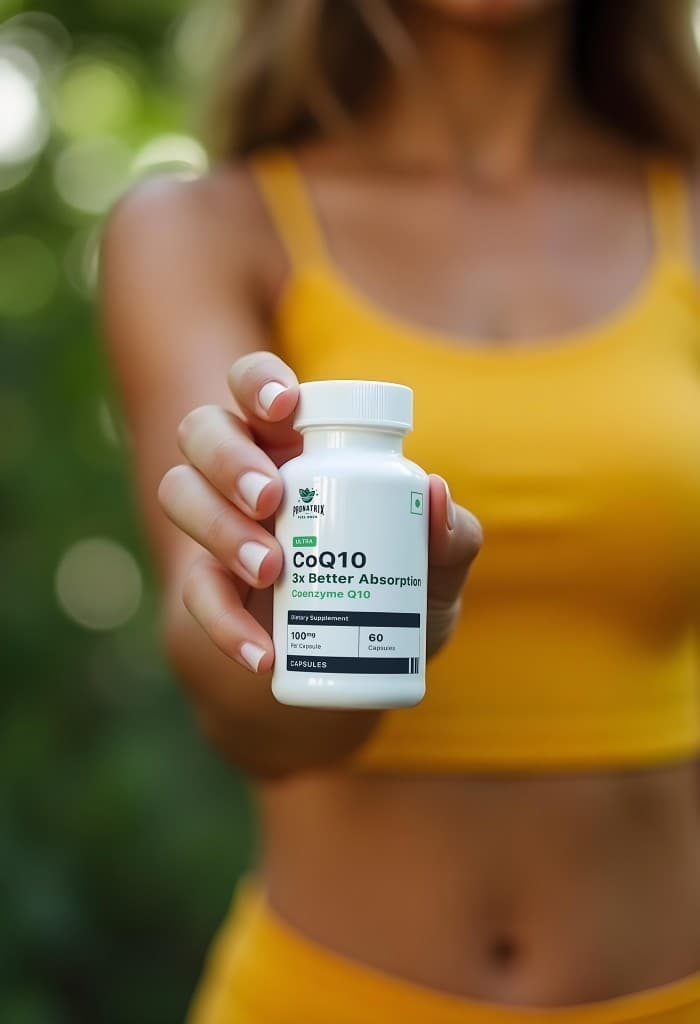
Standard CoQ10 has relatively low bioavailability. Formulations that pair CoQ10 with Vitamin E or use micronized or ubiquinol forms can significantly improve absorption. For instance, Ultra Coenzyme Q10 is designed with enhanced absorption in mind, delivering 100mg of CoQ10 alongside Vitamin E to support better uptake.

Be consistent

CoQ10 builds up in your system over time. One-off doses won't do much. Daily use for at least a month is where you'll start noticing effects, if they're going to show up for you.

Manage expectations

CoQ10 isn't a fix for sleep deprivation, poor nutrition, or underlying health conditions. It supports cellular energy, which is foundational—but it works best as part of a broader wellness routine.

Who Benefits Most from CoQ10 for Energy?

Not everyone needs CoQ10 supplementation, but certain groups tend to see clearer benefits:

  • People over 40: Natural production declines, making supplementation more relevant
  • Statin users: These medications can reduce CoQ10 levels as a side effect
  • Athletes and active individuals: Higher energy demands mean greater CoQ10 turnover
  • Those managing chronic stress or fatigue: Increased oxidative stress can deplete CoQ10

If you're young, healthy, eating well, and feeling energetic, you may not notice dramatic shifts. But if you're in one of the groups above and dealing with persistent tiredness, CoQ10 might be worth exploring.

Key Takeaways

  • CoQ10 is a naturally occurring compound essential for ATP production in your mitochondria
  • Levels decline with age, stress, intense activity, and certain medications like statins
  • Research suggests CoQ10 supplementation may reduce fatigue and improve cellular energy, especially in those with lower baseline levels
  • Effects build gradually—expect subtle improvements over 4-8 weeks, not instant energy
  • A dose of 100-200mg daily with fat-containing meals supports better absorption
  • Enhanced formulations with Vitamin E can improve bioavailability significantly

Frequently Asked Questions

Q: How long does it take for CoQ10 to increase energy levels?
A: Most people notice gradual improvements in energy and reduced fatigue after 4-8 weeks of consistent daily supplementation. CoQ10 builds up in your tissues over time rather than providing an immediate boost.

Q: Can I take CoQ10 for energy every day?
A: Yes, CoQ10 is generally well-tolerated for daily, long-term use at typical doses of 100-200mg. It's a compound your body already produces, and supplementation simply helps maintain optimal levels.

Q: Is CoQ10 better than caffeine for energy?
A: They work differently. Caffeine is a stimulant that blocks fatigue signals temporarily. CoQ10 supports the underlying cellular energy production process, so effects are more foundational and sustained but less immediately noticeable.

Q: Should I take CoQ10 in the morning or at night?
A: Either works, though many prefer morning or midday with a meal containing fat to support absorption. CoQ10 doesn't interfere with sleep like stimulants do.

Q: Does CoQ10 help with tiredness from stress?
A: It may help indirectly by supporting mitochondrial function, which can be taxed during chronic stress. However, addressing the stress itself—through rest, adaptogens like ashwagandha, or lifestyle changes—is equally important.

Q: Can I combine CoQ10 with other supplements for energy?
A: Yes, CoQ10 pairs well with other foundational supplements. Some people combine it with creatine for enhanced cellular energy support, or with adaptogens for broader stress and energy management. Always introduce supplements one at a time to assess individual effects.

This article is for educational purposes only and is not medical advice.

Sources

Written by

Editorial Team

Explore the Pronatrix range

If you are building a wellness routine, browse the full Pronatrix range and find what fits your day best.